Inside a B2B Catalogue Project: Blendi Group
Back to the journal / KORBI projects
By KORBI · 27 October 2026 · 3 min read
A printing company’s catalogue needs to do more than display items. This walkthrough looks at the product paths and quotation flow built for Blendi Group.
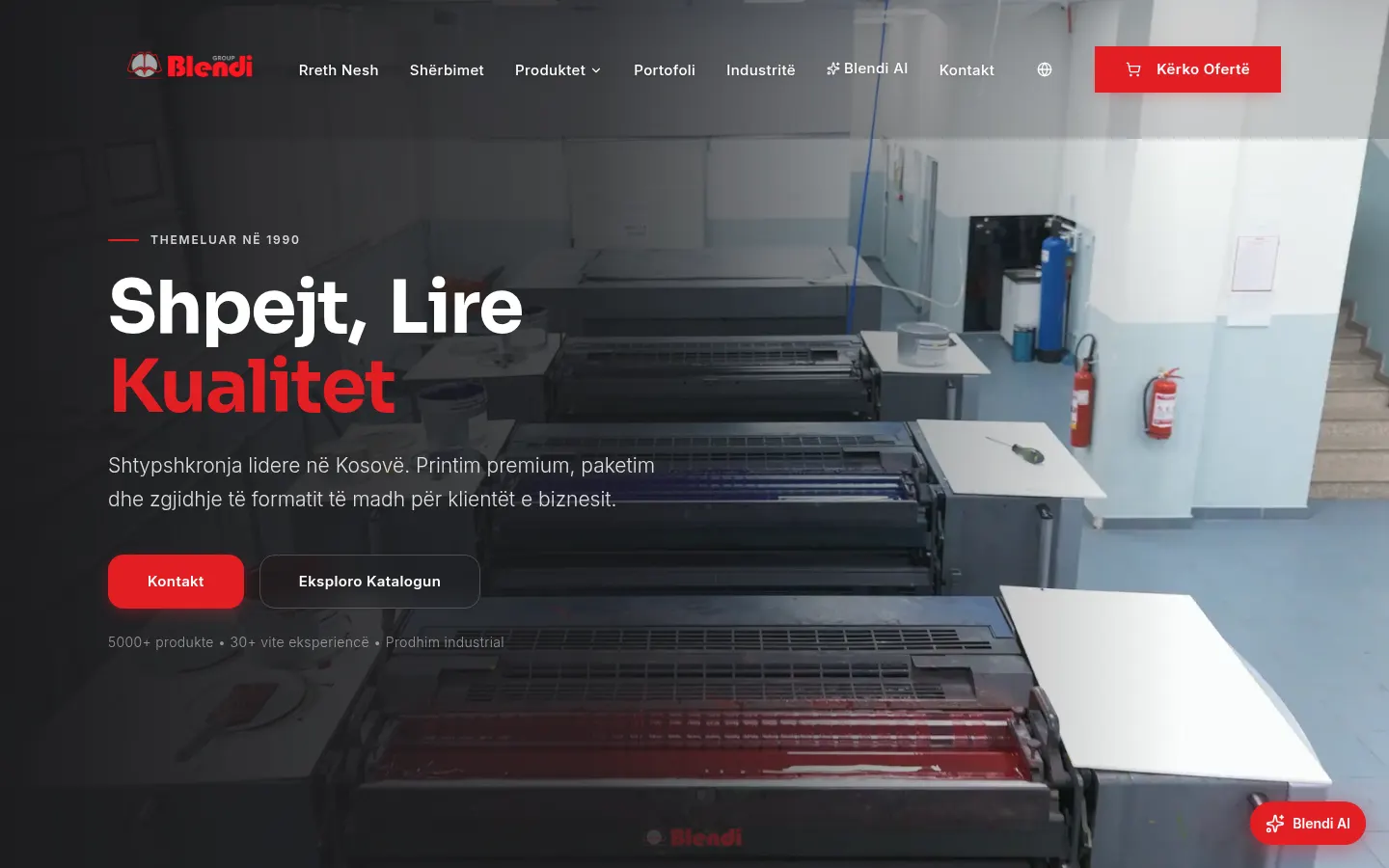
Blendi Group is a printing house founded in 1990. Its live website presents the company, its services, products, portfolio and industry work. The product catalogue adds a different kind of task: help a business customer identify a product and prepare an inquiry with the information needed to continue the conversation. This is a project walkthrough, not a performance case study; no traffic, revenue or conversion results are claimed.
One website, several reasons to visit
A visitor may want to understand the printing services, browse examples, look up a particular product or assemble a quotation request. Those intentions need different paths. The site connects the company presentation to a catalogue that can be searched and filtered, then lets a visitor open a product page with its own details and colour variants. The structure makes product discovery part of the business website rather than a separate PDF download.
Product pages carry the decision forward
A catalogue card starts the search; the detail page gives the buyer more context. A product such as the ABSOLUT HOODY 350 is presented with colour options, including Army Green, so the selected variant can carry into the next step. That distinction matters when a buyer refers to a colour or model code in a later message. The experience does not make a commercial promise about price or stock that the source material does not establish.
A quote basket turns selection into one request
Instead of asking the buyer to email each product separately, the quotation basket gathers the chosen items and their variants into one inquiry. The request can include the product code, selected colour and quantity, giving the sales team a clearer starting point. The basket is not a consumer checkout: the product journey is designed around requesting a quotation, not paying for a finished cart online.
What prospective catalogue owners can take from it
- Design the product structure around the buyer’s choices and the sales team’s follow-up.
- Give products stable identifiers and make variants visible before they enter a request.
- Keep the distinction between a quote workflow and a checkout workflow clear.
- Test the full path from category to product to request, including the information the inquiry contains.
- Treat product-data ownership and updates as part of the system, not a one-time upload.
What this walkthrough does not claim
Public project evidence supports the visible features described here: the company site, product catalogue, filters, product pages, colour variants, quotation basket and product-discovery page. It does not support claims about improved sales, traffic, conversion rates, private system integrations or a particular technology stack. A credible case study should be specific about what can be seen and equally clear about what is not known.
Sources & further reading
- Blendi Group website — Live project
- Blendi Group project overview — KORBI Work
Continue reading
- Why Manufacturing Companies Need B2B Product Catalogues
A digital catalogue is not just a PDF placed online. It is a structured product experience that helps buyers find the right item and send a useful request.
- Web Design Agency in Kosovo: What Businesses Should Look For
Choose an agency by checking the work, the people and the handover—not by trusting a “best agency” claim or a polished pitch alone.